Road Trip with a Dog: Roof Box or Rear Box?
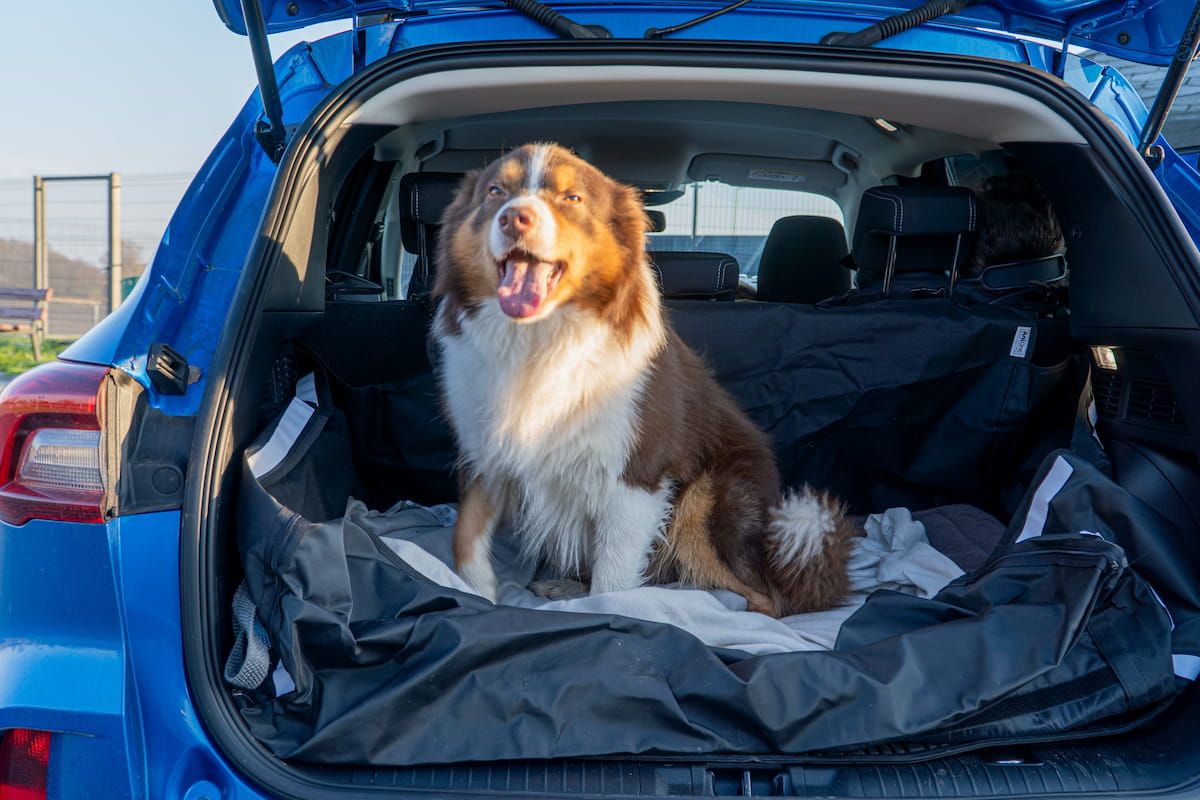
Planning a road trip with a dog turns car packing into a puzzle. Your dog needs the back of the car — securely strapped in, with a blanket, water bowl and enough room to lie down. Your luggage has to go somewhere else. For most families, that means one decision: roof box or rear boxfor rent?
Both add the storage you need for a comfortable dog road trip — but they don't fit equally well. Here's how to choose, and what each one is best at carrying.
Roof box or rear box – which works better when travelling with a dog?
The decisive thing about travelling with a dog: the boot belongs to the dog. That fact alone tilts the answer.
A roof box sits entirely on top of the car and leaves rear access untouched. Your dog can hop in and out at every break, and you have the room you need to lift the dog up or set up a ramp. Roof boxes hold 300 to 600 litres depending on model — plenty of room for both family luggage and dog gear. Drawbacks: it gets hot inside in summer, and the car becomes taller (a bit more wind noise and fuel use).
A rear box sits on the tow bar and is easier to load thanks to its hip-height position — but it quickly runs into limits when a dog is part of the picture. Many dogs, especially older or larger ones, can't get into the boot on their own. They need lifting, carrying, or a ramp — and all of that needs clear space behind the car. Even a tilting model that swings sideways only partly solves this: the box still gets in the way when you're lifting a big dog with both arms or trying to position a ramp.
Rule of thumb: for travelling with a dog, a roof box is the better choice in the vast majority of cases. A rear box only really makes sense if your dog is small and agile enough to hop into the boot on its own — or if it travels on the back seat and doesn't need to enter the boot area at all.
What belongs in the box – and what should stay out?
Whether you go with a roof box or a rear box, the packing rules are largely the same. The main difference is temperature: roof boxes can hit 50–60 °C inside in direct sun. Rear boxes get less hot because they don't sit on top of the car — but even there, perishable or sensitive items shouldn't spend hours in summer heat.
What's fine in the box:
- Blankets, dog cushions and spare towels
- Rubber or fabric toys
- Dry food in airtight packaging
- Spare leashes, collars and harnesses
- Dog shampoo (in a sealed bag against leaks)
- With a rear box (if suitable for your dog's size), also: water bowl, drinking bottles, paw towels and snacks for breaks
What you should not store in either box:
- Wet food and damp snacks — they spoil in the heat
- Medication, especially drops, ointments or tick sprays
- Sensitive vitamins or supplements
- Plastic water bottles (heat changes the taste)
What stays in the cabin?
No matter which box you pick, some items belong neither up top nor on the back, but within arm's reach inside the car:
- EU pet passport and up-to-date vaccination record
- A small dog first-aid kit
- Phone numbers for vets along your route
- A second leash and a muzzle (legally required in some countries)
- Reward treats for breaks
Glove box or a small bag in the footwell — somewhere you can grab it without getting out.
Practical tip: plan your breaks
On longer drives, dogs need a break every two to three hours to drink, stretch and walk a little. Planning around service stations with dog-friendly areas makes the whole road trip more relaxed for everyone. If you're unsure what size box or which carrier system fits your car — or whether a rear box even makes sense for your setup — get in touch via our contact form.