E-Bike Transport on Your Car: Tow Bar Load & Safe Carriers
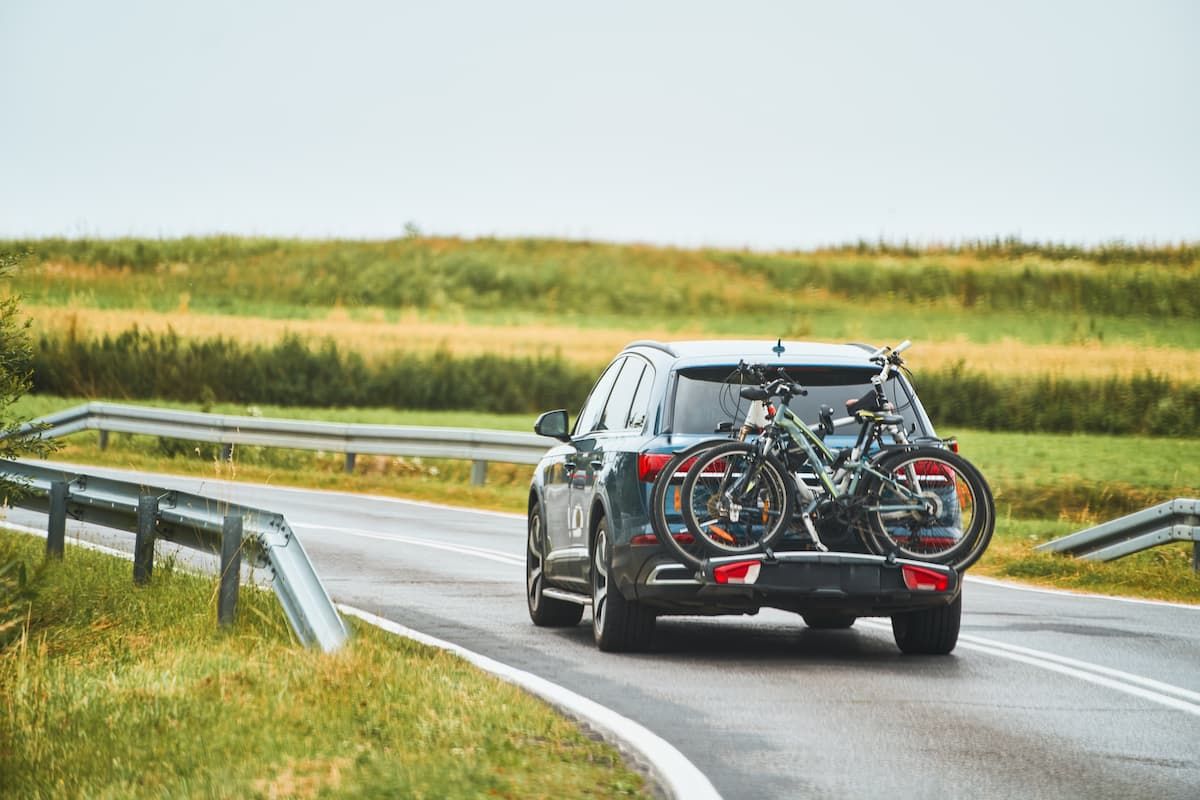
Carrying an e-bike on your car isn't the same as carrying a regular bike. E-bikes weigh 22 to 30 kilograms each, nearly twice as much as a classic city bike. That means the average bike carrier no longer cuts it, and some tow bars don't either.
The good news: three numbers tell you upfront whether your setup works. Let's go through them, plus what to look for in the carrier and how to secure the bikes properly.
Nose weight: the most important number
Every tow bar has a maximum vertical load. That's the nose weight (or tow ball weight). You'll find it in the vehicle documents or on the type plate on the tow bar itself. Current passenger cars typically range from 75 to 90 kilograms, older vehicles or small estates sometimes only 50 or 60.
That capacity has to cover three things:
- the weight of the bike carrier itself (typically 14 to 20 kilograms)
- the weight of the bikes you're transporting
- any add-ons such as license plate holders, covers or extra rails
Example: your tow bar is rated for 75 kilograms, your carrier weighs 17. That leaves 58 for the bikes. Two e-bikes at 25 kilograms each (without the battery, which has to come off anyway) fit comfortably. Two e-bikes at 30 kilograms each exceed the limit. In that case you'd need a lighter e-bike or take only one bike.
If your tow bar's nose weight isn't enough for your setup: ask your dealer about a higher-rated tow bar. Some vehicles can be retrofitted, and some carriers have official approvals for raised nose-weight values.
Why roof carriers are out for e-bikes
You could in theory carry bikes on the roof. For e-bikes that's almost never a realistic option, for two reasons.
First, the per-holder load limit: most roof bike carriers are rated for only 17 to 20 kilograms per bike. An e-bike at 22 to 30 kilograms already exceeds that.
Second, frame geometry: many e-bikes have step-through frames, thick down tubes with integrated batteries, or unusual tube shapes. Standard roof carrier clamps often don't fit, even when the weight would work.
And then the practical side: lifting a 25-kilogram bike to shoulder height alone is barely possible, on bigger cars it's outright dangerous. So for e-bike transport, a tow-bar-mounted bike carrier is practically the only sensible option.
What to look for in an e-bike carrier
Not every bike carrier is approved for e-bikes. When renting or buying, watch for these points:
- Explicit e-bike approval from the manufacturer (in the spec sheet or printed on the carrier)
- Max load per rail (typically 30 kilograms, sometimes only 25). Not just the total matters, but what each rail allows
- Solid frame holder with a clamp. Straps alone aren't enough for e-bikes
- Tilting mechanism so the boot opens without removing the bikes
- Anti-theft locks on the frame holder and on the carrier-to-tow-bar connection
Loading and driving safely
Before every drive with e-bikes on the tow bar, this routine is standard:
- Remove the battery and carry it inside the car. All reputable carrier manufacturers require this, it's not optional. The effect: lower nose weight, protection from weather and vibration, no theft target at rest stops
- Secure the bikes by the frame in the holder, plus a second fix for the front wheel against rotation
- Remove or firmly attach loose accessories such as water bottles, bike computers, baskets or saddlebags
- Check lighting and plate: the lights on the carrier are built in, but they all need to work (left and right indicators, brake light, taillight, plate light). Attach the license plate and check it sits securely
On motorways: stick to the maximum speed listed by the carrier manufacturer. For most tow-bar bike carriers that's 130 km/h, some models only up to 110 km/h. It's in the manual. Every 50 to 100 kilometres, pull over briefly and check the carrier and bikes. Vibration can loosen bolts over time. Further questions about tow-bar bike carriers are answered in our FAQ section.
Things to know for trips abroad
Bike carrier rules vary from country to country. Particularly relevant: in Italy and Spain a red-and-white-striped warning panel is mandatory whenever your load extends beyond the vehicle outline. With a bike carrier that's practically always. Other countries have their own rules on lighting, plates or speed. Check the regulations of your destination before setting off.
Handy: you can rent both the warning panel and the matching license plate directly with the carrier from us.
When in doubt, ask
Nose weight, carrier weight, e-bike approval: these aren't details to leave to chance. If you're not sure your specific combination of car, tow bar and e-bike works, get in touch via our contact form. We'll walk through the calculation with you and tell you straight if the combination is borderline.