What to Pack in a Roof Box – and What Not To
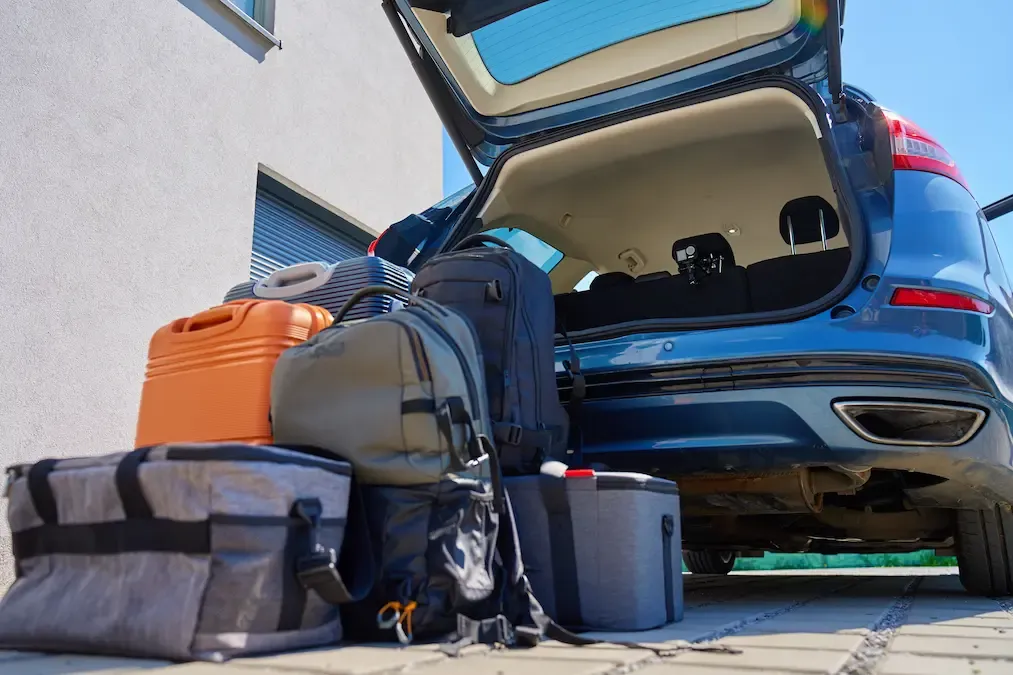
The roof box is mounted, the holiday is around the corner, and the luggage is piling up in front of the car. Now comes the question that arises before every trip: what actually goes up into the box, and what stays inside the vehicle? The answer affects more than tidiness in the boot. It also affects safety on the motorway.
What belongs in a roof box
A roof box is best suited to light and bulky luggage. Anything that takes up a lot of space but weighs little is well placed up top. This includes:
- Sleeping bags, blankets and bedding
- Jackets, clothing and shoes in bags
- Camping chairs, sleeping mats and light tents
- Pram attachments and lightweight toys
- Skis, snowboards and hiking gear
The reason is simple: every kilogram on the roof sits high up and shifts the vehicle's centre of gravity upward. Light luggage on top and heavy luggage low in the boot keeps the car stable, especially in bends and crosswinds.
What is better left in the car
Heavy and compact luggage belongs down low, not on the roof. The most common mistake: the heaviest suitcase ends up on top because there is no room left in the boot. That is exactly what should not happen. Heavy items raise the centre of gravity and belong inside the vehicle.
These items should stay inside:
- Heavy, fully packed suitcases
- Full water bottles and supplies for the journey
- Electronics such as a laptop, camera or tablet
- Important documents, cash and valuables
- Anything that suffers in heat (more on that below)
Take care in the heat
In summer, a roof box heats up considerably in direct sunlight. Pressurised cans, lighters, chocolate or cosmetics have no place up there. Medication that needs to be kept cool also belongs down in the vehicle. Keeping this in mind saves you from leaking tubes and burst cans at your destination.
Mind the weight
Two limits matter when loading. The first is your vehicle's permitted roof load. You will find it in the owner's manual, and for most cars it sits between 50 and 100 kilograms. This limit includes the weight of the roof bars, the roof box itself and the luggage combined.
The second limit is the maximum payload of the box. An empty roof box weighs roughly 13 to 20 kilograms depending on its size. Always include this weight when checking the roof load. How much remains for luggage depends on the vehicle and the box. In many cases it comes to 40 to 70 kilograms of luggage.
Distribute it correctly
Inside the box the rule is: heavy items in the centre and low, light items toward the edges. Pad out any gaps with blankets or clothing so nothing slides around. A load that shifts during the drive changes the handling and can damage the box. Straps inside the box help keep everything in place.
Check before you set off
A quick check before driving off saves trouble. Is the box firmly seated on the bars? Are all the catches engaged? Is the lid closed all around with nothing trapped? After the first few kilometres it is worth a second look to confirm everything is still secure.
If you are unsure which size suits your luggage, our overview of the different roof box sizes will help. And if you are using a bike carrier or a rear box as well, check the nose weight beforehand. Our nose weight calculator is there for that.
With the right distribution, a roof box becomes a relaxed travel companion: light luggage up top, heavy luggage down low, the weight kept in view. That leaves room in the car and keeps the drive safe. If you have questions about the right box, we are happy to advise you in person at collection in Darmstadt.